
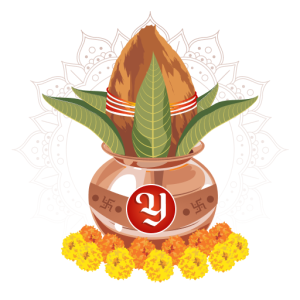


A Kalash is established before every puja because it acts as an energetic focal point, a cosmic antenna, and an earthly embodiment of the Supreme Divine. In the Vedic tradition, no sacred ritual, whether a daily home worship, Navratri pujan, Griha Pravesh, or Yajna, begins without the formal consecration known as Kalash Sthapana. It is the primary receptacle that invokes universal cosmic energies into the physical realm, transforming an ordinary room into a sanctified, consecrated altar.
The sacred pot serves as a microcosm of the entire universe. It encapsulates all 5 primordial elements, houses the holy Trinity of Brahma, Vishnu & Shiva, and anchors the divine presence of the Mother Goddess alongside all holy rivers, sacred scriptures and directional guardians.
The Sacred Receptacle of Cosmic Energy
The Sanskrit word Kalash refers to a metallic or earthen pitcher filled with clean water, adorned with sacred leaves, topped with a consecrated coconut, and bound by sanctified red thread. Setting up this sacred vessel is neither a decorative custom nor a preliminary formality. It is a foundational Vedic technology designed to harmonize the spiritual seeker, known as the Yajman, with cosmic frequencies.
In Vedic philosophy, every individual ritual is an invitation extended to cosmic intelligences, termed Devas and Devis, to descend and bless the physical surroundings. Before invoking these divine forces, the surrounding space must be cleansed of discordant vibrations and saturated with pure life-force energy, or Prana. The Kalash functions as a sanctified battery that holds, amplifies, and distributes this pure spiritual charge throughout the duration of the ceremony.
Connecting with authentic traditions often requires the guidance of learned scholars who understand the precise mechanics of these sacred energies. Platforms like the Yajman App help devotees perform these ancestral rituals with verified Vedic pandits, ensuring that foundational practices like Kalash Sthapana are executed with scriptural precision and deep spiritual understanding.
Scriptural Origin and Mythological Foundations
The establishment of the Kalash is documented across classical Vedic texts and Puranas. Its origin is deeply intertwined with the cosmic creation stories and the primordial quest for immortality.
The Samudra Manthan Narrative
The most renowned mythological origin of the Kalash occurs in the Srimad Bhagavatam, Mahabharata, and Vishnu Purana during the episode of Samudra Manthan. When the Devas and Asuras churned the cosmic ocean to restore balance and retrieve lost divine treasures, 14 sacred gems emerged.
The ultimate manifestation was Lord Dhanvantari, the physician of the gods and an incarnation of Lord Vishnu, who emerged from the churning waters holding a glowing golden vessel filled with Amrita, the nectar of immortality. This vessel was the original Amrit Kalash. Thus, the Kalash symbolizes self-realization, spiritual rejuvenation, and the preservation of divine life-force that defies physical decay and worldly suffering.
कलशस्य मुखे विष्णुः कण्ठे रुद्रः समाश्रितः ।
मूले त्वस्य स्थितो ब्रह्मा मध्ये मातृगणाः स्मृताः ॥
कुक्षौ तु सागराः सर्वे सप्तद्वीपा वसुंधरा ।
ऋग्वेदोऽथ यजुर्वेदः सामवेदो ह्यथर्वणः ॥
अङ्गैश्च सहिताः सर्वे कलशं तु समाश्रिताः ।
This verse from the Skanda Purana outlines the presence of divine hierarchies within the single structure of the Kalash:
- Mouth of the Kalash: Seat of Lord Vishnu, the preserver and sustainer.
- Throat (Neck) of the Kalash: Abode of Lord Shiva (Rudra), the transformer and dissolver of impurities.
- Base of the Kalash: Seat of Lord Brahma, the creator.
- Belly (Core) of the Kalash: Sanctuary of the Matrikas and the seat of all sacred rivers and seven oceans.
- Body of the Kalash: Residence of the four Vedas—Rigveda, Yajurveda, Samaveda, and Atharvaveda—alongside their spiritual subsidiaries.
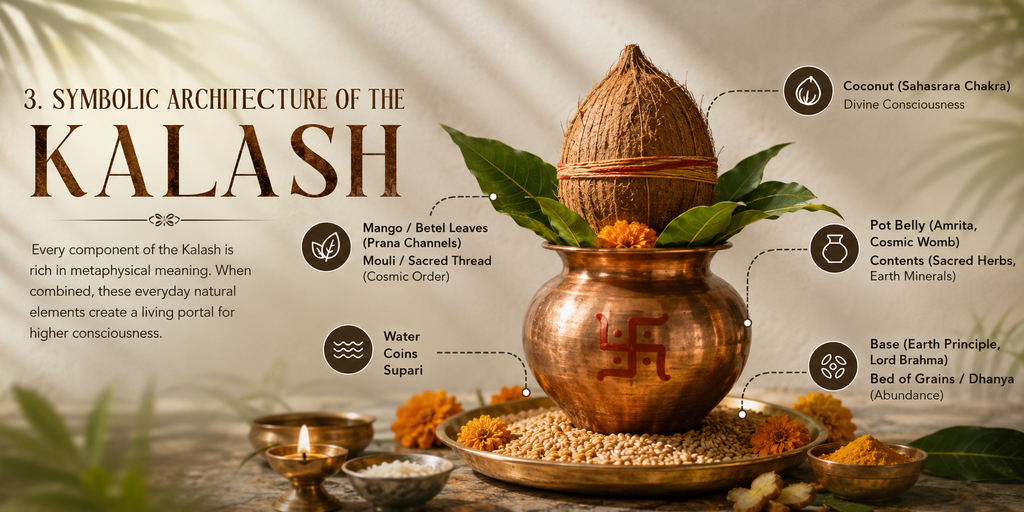
3. Symbolic Architecture of the Kalash
Every component of the Kalash is rich in metaphysical meaning. When combined, these everyday natural elements create a living portal for higher consciousness.
The Vessel (Kumbha or Pot)
The physical pot represents Mother Earth, the Hiranyagarbha and the human physical body. Just as the vessel is molded from clay or crafted from metal, the human body is formed from terrestrial matter. Establishing the vessel affirms that physical matter can become a vessel for divine light when purified.
The Sacred Water
The water inside the pot represents the primordial cosmic waters from which all life emerged. Water is the universal solvent, both physically and energetically. It absorbs sonic vibrations and spiritual intentions instantly. In the Kalash, it embodies the life-giving Amrita washing away internal grief, mental agitation, and negative environmental impressions.
The Five Sacred Leaves
Typically, five leaves of the Mango or Betel (Tambula) tree, and sometimes Ashoka or Peepal leaves, are placed along the rim of the pot. These leaves point outward and upward, forming a natural canopy:
- They represent the five senses (Jnanendriyas) redirected toward spiritual absorption.
- They symbolize the 5 vital life-breaths (Pancha Prana): Prana, Apana, Vyana, Samana, and Udana.
- They act as funnel-shaped directional antennas that capture subtle cosmic frequencies from the atmosphere and channel them downward into the consecrated water.
The Coconut (Shriphal)
The coconut placed atop the leaves is called Shriphal, the fruit of Lakshmi, representing auspiciousness and total fruition. Metaphysically, the coconut represents the human head:
- The hard outer coir and shell represent the outer physical body, worldly attachments, and the stubborn human ego.
- The three distinct marks or eyes on the shell mirror the three Gunas (Sattva, Rajas, Tamas) and symbolize the third eye of inner wisdom (Ajna Chakra).
- The pure, sweet water and white kernel inside represent absolute inner purity, uncontaminated by external pollutants.
- Placing the coconut on the Kalash signifies the total surrender of individual intellectual pride to the Supreme Divine.
The Sacred Red Thread (Mauli or Kalawa)
The cotton thread wound around the neck and body of the vessel represents Rta, the cosmic order that binds and governs the universe. It serves as an energetic seal, maintaining the purity of the consecrated pot and defending against discordant vibrations. It reminds the worshiper of their unbreakable spiritual bond with the divine cosmic hierarchy.
The Inner Ingredients: Coin, Betel Nut, and Sacred Herbs
Before sealing the Kalash, specific items are placed inside the water:
- A Pure Metallic Coin: Symbolizes material prosperity, selfless resourcefulness, and sacrifice (Tyag).
- Betel Nut (Supari): Represents firm determination, the solidification of righteous intentions (Sankalpa), and the removal of harsh karmic knots.
- Akshat (Unbroken Rice): Represents wholeness, unbroken spiritual awareness, and eternal life.
- Sacred Herbs and Sacred Earth (Saptamrittika): Express reverence for nature and ground the vessel with the restorative energies of medicinal flora.
Pancha Tattva Alignment
| Element | Kalash Component | Metaphysical Function |
| Prithvi (Earth) | Clay/Metal Pot, Grains, Coin | Provides physical grounding, stability, and nourishment |
| Jal (Water) | Holy Ganga Water inside the Pot | Sustains life-force, dissolves karmic impressions, and purifies |
| Agni (Fire) | Swastika Marking, Consecration Rites | Transmutes intentions, removes stagnation, and activates energy |
| Vayu (Air) | Mango Leaves protruding outwards | Circulates prana, cools the atmosphere, and cleanses the space |
| Akash (Space) | The Inner Hollow Cavity of the Vessel | Creates a vacuum for divine cosmic presence to dwell |
Scientific and Subtle-Energy Rationale
Vedic rituals balance spiritual devotion with natural sciences, including metallurgy, bio-resonance, and environmental physics.
Metallic Resonance and Ionization
Traditional Vedic injunctions prescribe copper (Tamra), brass (Pittal), bronze (Kansya), silver (Rajat), or gold (Swarna) for the Kalash vessel. Iron, steel and synthetic materials are avoided.
Copper and brass possess natural electromagnetic conductivity and oligodynamic properties. When clean water sits in a copper vessel, copper ions dissolve into the water in trace amounts. This process:
- Neutralizes bacterial colonies and fungal spores.
- Alkalizes and stabilizes the water structure.
- Enhances electrical conductivity, allowing the liquid to store subtle energetic impressions.
Vedic Chanting Vibrations (Sound Waves)
│
Mango Leaves Funnel Receptor
│
Copper / Brass Vessel Wall
│
Ionized Water Matrix (Energy Storage)
│
Ambient Radiant Field (Purified Home Space)
Acoustic Memory and Water Crystals
Water molecules readily form clusters whose geometry alters based on environmental input and sound frequencies. During a puja, Vedic priests chant high-frequency Sanskrit mantras with specific intonations.
The wide-mouthed metallic vessel, topped with crystalline leaves, catches these acoustic vibrations. The ionized water absorbs these frequencies, storing the devotional intent and scriptural vibrations throughout the puja. When this sanctified water (Charanamrit or Shanti Jal) is sprinkled across the residence at the end of the ceremony, it disperses these balanced vibrational frequencies throughout the entire living space.
Air Purification Through Phyto-Compounds
Mango leaves emit volatile organic compounds, terpenes, and tannins that possess natural antimicrobial and air-purifying qualities. When exposed to ambient moisture and the gentle heat of the nearby oil lamp (Deep) and sacred fire, the leaves release subtle compounds that help purify room air.
Step-by-Step Kalash Sthapana Vidhi
Setting up the Kalash is a focused procedure that prepares the space for deeper worship.
Step 1: Altar Grounding (Asana & Dhanya)
│
▼
Step 2: Vessel Consecration & Water Pouring
│
▼
Step 3: Placement of Inner Treasures (Coin, Supari, Herbs)
│
▼
Step 4: Arranging Mango Leaves Canopy
│
▼
Step 5: Coconut Orientation (Facing the Yajman)
│
▼
Step 6: Invocation & Prana Pratishtha Mantras
Step 1: Preparation of the Ground (Asana and Dhanya)
A clean wooden platform (Chauki) is placed facing the East or North-East (Ishan Kon) direction. A clean red or yellow cloth is spread over it. On this cloth, an Asana of unbroken rice grains (Akshat) or a mixture of seven sacred grains (Navadhany) is laid out, often formed into an eight-petaled lotus (Ashtadala Kamal). This grain foundation ensures that the metallic vessel does not touch the bare floor, preventing energy from grounding out prematurely.
Step 2: Preparing and Purifying the Vessel
The vessel is cleaned, dried, and sanctified. Using natural vermilion (Kumkum) or sandalwood paste (Chandan), a sacred Swastika is drawn on the outer belly of the vessel. The Swastika symbolizes the four cardinal directions, four Vedas, and all-round auspiciousness. The red sanctified thread (Mauli) is tied around the neck of the pot in three or five rounds.
Step 3: Filling the Waters and Adding Sacred Items
The pitcher is filled with clean water, ideally mixed with a few drops of water from sacred rivers like the Ganga, Yamuna, or Godavari. While pouring the water, the Varuna Mantra or the sacred river invocation is chanted:
गङ्गे च यमुने चैव गोदावरि सरस्वति ।
नर्मदे सिन्धु कावेरि जलेऽस्मिन् संनिधिं कुरु ॥
Following the water, the sacred items are dropped into the pot:
- Whole betel nut (Supari)
- Clean metallic coin
- Pinch of Akshat
- Medicinal herbs or sacred grass (Durva)
- Dash of fragrant perfume (Gandha or Ittar)
Step 4: Arranging the Foliage
Five, seven, or nine fresh, unblemished mango or betel leaves are arranged around the neck of the vessel. The glossy, green surfaces face outward, while the stems dip directly into the energized water. The tips of the leaves point upward to catch subtle cosmic energy.
Step 5: Crowning with the Sacred Coconut
A ripe coconut containing natural water is selected. It is wrapped in a fresh red cloth (Chunri) or wound with sacred red thread (Mauli), leaving the three-eyed sprout end exposed.
The coconut is placed securely atop the ring of leaves. The orientation of the coconut is critical: the head or eye-end of the coconut must point directly toward the worshiper (Yajman), not upward, downward, or away.
Step 6: Invocation and Consecration (Prana Pratishtha)
Once the Kalash is physically assembled, it must be spiritually enlivened through Avahana (invocation). The priest touches the vessel while reciting the Kalash Suktam and Varuna Mantras, praying for the cosmic presence of the deities, rivers, and Vedic masters to inhabit the vessel for the duration of the ceremony.
Navigating these authentic Vedic procedures can feel challenging for modern households. The Yajman App bridges this gap by connecting families directly with learned, verified Purohits who perform traditional ceremonies step-by-step according to regional and Vedic traditions.
Common Mistakes to Avoid During Kalash Sthapana
Even small oversights during setup can disrupt the balance of the ritual space.
- Incorrect Coconut Orientation: The tip (eye side) of the coconut must always face the devotee (Abhimukh). Pointing the tip toward the sky can cause unnecessary domestic friction; pointing it downward can reduce material stability, while pointing it away from the devotee can scatter the energy of the ritual.
- Using Damaged or Synthetic Materials: Steel, aluminum, iron, and plastic containers are unsuited for Vedic invocation because they lack the required bio-energetic resonance. Similarly, dry, torn leaves or a dried-out, hollow coconut should be replaced with fresh components.
- Skipping the Grain Base: Placing a metallic Kalash directly on the bare floor without a foundation of rice, wheat, or barley is considered Adhar Heen (groundless), allowing gathered energies to dissipate into the earth.
- Improper Post-Ritual Visarjan: After the worship concludes, pouring the consecrated Kalash water down a drain is disrespectful. The water should be used as Charanamrit, sprinkled around living areas to clear energy, and then poured onto the roots of a sacred Tulsi plant or fruit-bearing tree.
The Kalash as a Blueprint for Conscious Living
The Kalash is more than an ancient ritual instrument; it is a practical blueprint for a balanced, conscious life:
- Like the pot, our physical body must remain grounded, stable and strong.
- Like the water, our mind must stay pure, transparent and open.
- Like the leaves, our senses should point upward toward wisdom and higher awareness.
- Like the coconut, our ego must be cracked open to reveal the sweet, unpolluted truth within.
By establishing a Kalash, we consciously invite divine harmony into our homes, turning our living spaces into serene temples of devotion. Through platforms like the Yajman App, preserving and practicing these deep Vedic traditions remains accessible, authentic and seamless for modern families across the globe.
Frequently Asked Questions (FAQs)
1. Can we perform a Vedic puja without establishing a Kalash?
For brief daily prayers, lighting an oil lamp and offering incense is sufficient. However, for formal, structured ceremonies—such as Satyanarayan Katha, Navratri Pujan, Griha Pravesh, Vastu Shanti, or Havans—the Kalash is required. It serves as the primary vessel that anchors invoked deities, absorbs chant frequencies, and maintains energetic protection throughout the home.
2. Which direction should the coconut face during Kalash Sthapana?
The eye-marked sprout end of the coconut should face directly toward the devotee (Yajman). Ancient texts state that pointing the head upward causes mental anxiety, pointing it downward invites unnecessary hardship, pointing it toward the left or back invites disharmony, while pointing it directly forward toward the worshiper brings peace, health, and fulfillment.
3. What metal is best suited for the Kalash pot?
Pure copper (Tamra) is the most auspicious and scientifically beneficial metal for the Kalash vessel due to its strong energetic conductivity and antibacterial qualities. Brass (Pittal) and silver (Rajat) are also excellent choices. High-grade unbaked or terracotta clay pots are ideal for agricultural and seasonal pujas like Navratri. Iron, aluminum, and steel should never be used.
4. What should be done with the Kalash water after the puja is completed?
The energized water should be used respectfully:
- A small portion should be consumed as Charanamrit for health and inner peace.
- A portion should be sprinkled throughout every room of the home (except bathrooms) to clear negative vibrations.
- The remaining water should be poured onto the roots of a sacred Tulsi plant, a Peepal tree, or other clean garden plants. It should never be poured into a sink or drain.
5. Why are five mango leaves placed around the Kalash neck?
Five mango leaves represent the five elements (Earth, Water, Fire, Air, Space) and the five vital life-breaths (Pancha Prana). Their natural shape acts as an antenna system, capturing cosmic energy and guiding it down into the ionized water. In addition, mango leaves release clean phyto-compounds that naturally purify the surrounding air.
6. Can a householder set up a Kalash at home without a priest?
Yes, a householder can set up a simple Kalash for seasonal festivals by following scriptural rules: clean the altar, place an Asana of rice, use a clean copper pot filled with water, add a coin and betel nut, arrange fresh leaves, and top it with a coconut facing forward. For major lifecycle rituals , working with a qualified panditiji booked via the Yajman App ensures every mantra and mudra is performed accurately.